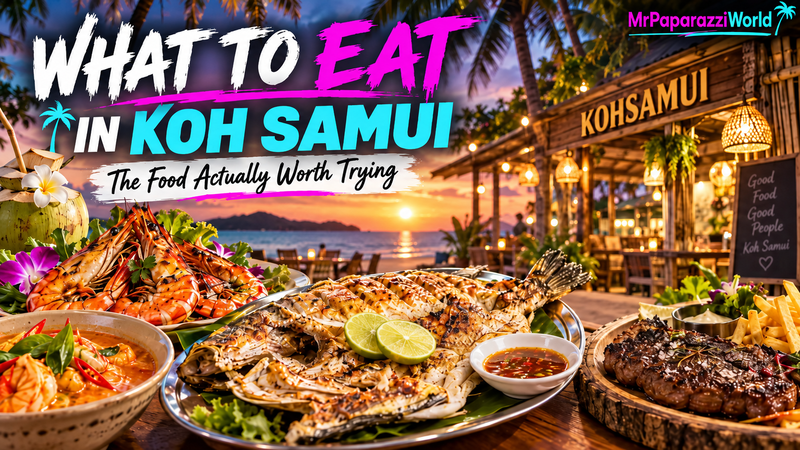
Forget the generic checklist of Pad Thai and mango sticky rice. Koh Samui is at its best when you eat according to where you are: Southern Thai curries, Gulf seafood, night-market grazing and the occasional meal with your feet almost in the sand.
Some links and widgets on this page are affiliate links. If you book through them, MrPaparazziWorld may earn a commission at no extra cost to you.
If you’re trying to work out what to eat in Koh Samui, don’t start with a list of Thailand’s most famous dishes. Start with the island itself.
Samui sits in Southern Thailand, and that matters at the table. Southern Thai cooking is associated with assertive spice, aromatic curry pastes, shrimp paste, turmeric, local vegetables and plenty of seafood. That doesn’t mean every meal needs to test your chilli tolerance, but it does mean there is more to discover here than the standard tourist-menu rotation.
The useful way to eat around Samui is to mix things up: one proper seafood lunch, one genuinely Southern Thai meal, an evening wandering a market, and at least one dinner where the setting is part of the reason you’re there.
Start With the Seafood
Being on an island doesn’t automatically make every seafood restaurant good, but seafood is still one of the most logical places to begin.
Grilled fish, prawns, squid and shellfish turn up everywhere from open-air local restaurants to resort dining rooms. The better approach is usually to order simply and let the ingredients do the work: a whole grilled fish, prawns from the grill or squid with a Southern Thai preparation rather than a giant mixed platter chosen mainly because it photographs well.
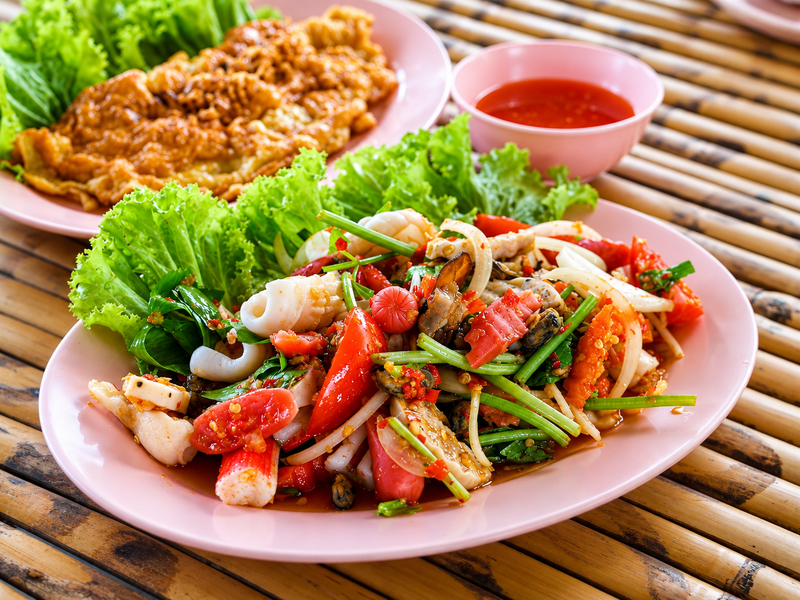
Seafood Takho restaurant in Koh Samui
One restaurant worth knowing about is Bang Por Seafood Takho. It appears in the MICHELIN Guide selection for Koh Samui under seafood, so it is at least a useful reference point if you want to see how an established local seafood restaurant approaches the category.
We also visited the restaurant during the Samui filming for MrPaparazziWorld, and the footage captures the sort of meal that makes sense here: whole fish, prawns, dipping sauces and uncomplicated tableside eating rather than elaborate presentation.
If you’re ordering fish or shellfish priced by weight, ask the restaurant to confirm the size and total price before it goes into the kitchen. It is a simple habit that avoids surprises later.
Try Southern Thai Food, Not Just Generic Thai Food
This is where the trip becomes more interesting.
Southern Thai food often leans harder into spice, herbs and fermented ingredients than the dishes many travellers first associate with Thailand. Ingredients such as shrimp paste, sataw beans, turmeric and local seafood appear regularly in the region’s cooking.
One dish worth looking for is kaeng som, a sour and spicy curry that can be made with fish or seafood. It is markedly different from the rich coconut-based curries many visitors expect.
Then there is sataw pad kapi — stink beans stir-fried with shrimp paste, often with prawns or meat. The beans have a strong aroma and a slightly nutty taste, while the shrimp paste gives the dish its unmistakably savoury edge.
It is not designed to be universally loved. That’s precisely why it is worth trying.
If your chilli tolerance is limited, say so when ordering. Eating Southern Thai food should be an experience, not an endurance contest.
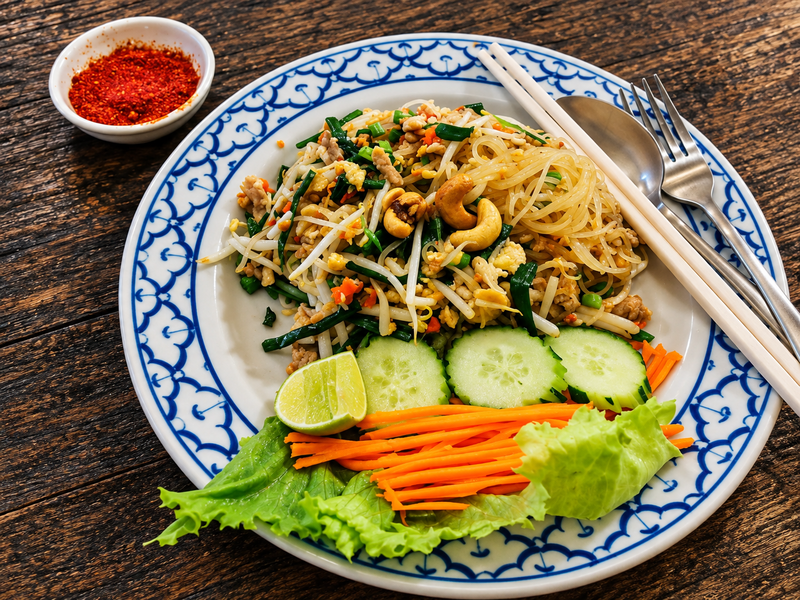
Southern Thai Food
Let the Whole Fish Be the Centre of the Table
A whole grilled or fried fish works especially well when several people are eating together. Put it in the centre, add rice, vegetables and a couple of sauces, and suddenly lunch feels less like everyone ordering an individual plate and more like an actual shared Thai meal.
The footage from our Samui trip captures this perfectly: fish served whole, lime alongside it, sauces around the table and prawns arriving on large shared plates.
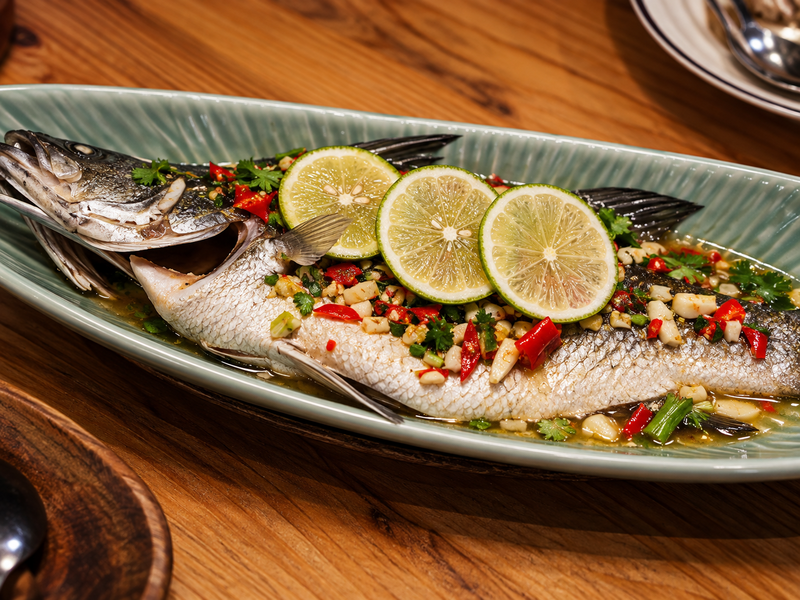
Whole grilled fish and seafood served in Koh Samui
Use the Markets to Taste More in One Evening
A night market is useful for a simple reason: nobody has to agree on dinner. You can try several smaller dishes, walk between stalls and decide what looks good instead of committing to one menu for the entire evening.
Fisherman’s Village in Bophut is a particularly easy place to combine food with an evening walk. The former fishing community is now lined with restored shophouses, cafés, restaurants and boutiques, with the area becoming especially active around its Friday walking street market.
The sensible strategy is to walk through once before buying anything. Look at what is actually being cooked, where there is turnover, and what other diners are ordering.
Turn Dinner Into Part of the Day
Food doesn’t have to be the only plan. If you’re already heading toward Bophut or Chaweng for dinner, you can build a temple visit, island activity or sunset experience around it first.
See what else is available around Koh Samui before deciding where the evening should end…
And Yes, You Can Order the Steak
There is an odd idea in travel writing that every meal abroad has to be culturally significant.
It doesn’t. Samui has a broad restaurant scene that goes well beyond Thai food. Alongside Southern Thai restaurants and seafood places, you’ll find European restaurants, steakhouses, cafés, burger spots and resort dining.
If you’ve eaten spicy curry and seafood for several days and suddenly want a steak, burger or something familiar, order it.
The point isn’t to eat Thai food at every meal. The point is not to spend a week in Southern Thailand without ever tasting Southern Thai food.
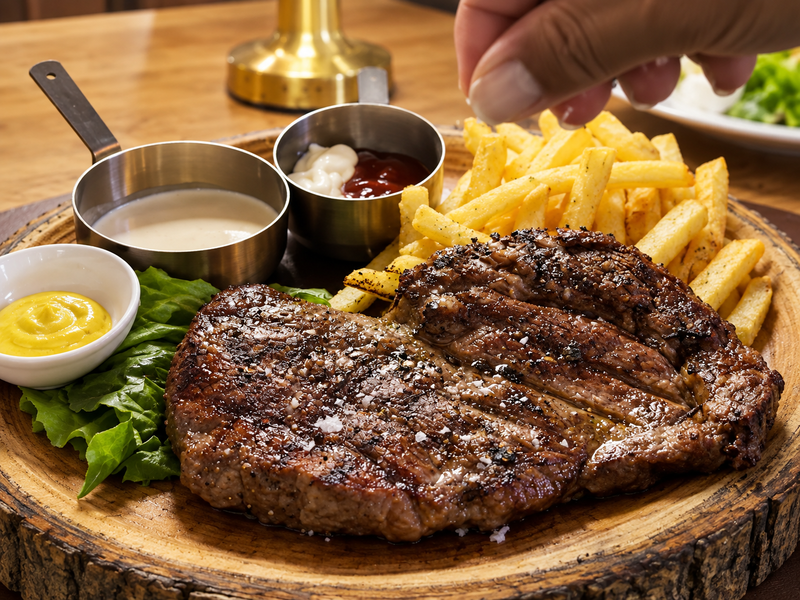
Steak and fries served at a restaurant in Koh Samui